Reflective Roof Coatings in Northwest Indiana
Extend your flat roof's life and cut summer cooling costs with a professionally applied elastomeric coating from Indiana Roofing Company.
Available Monday–Friday 7 AM–7 PM · Saturday–Sunday 7 AM–5 PM · After-hours calls welcome.
Elastomeric Coatings Protect Flat Roofs Across Northwest Indiana
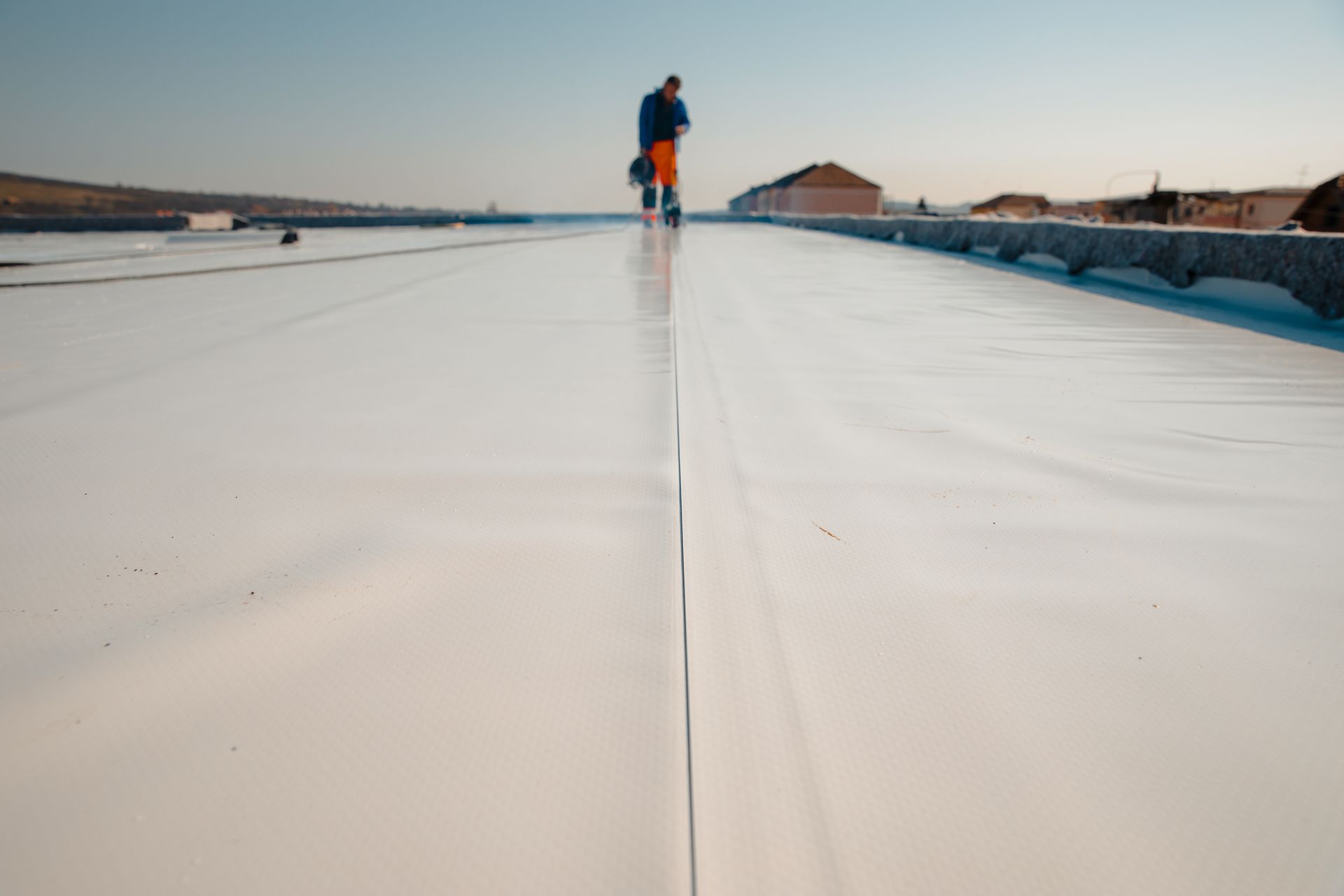
Indiana Roofing Company is a licensed roofing contractor serving Hammond, Indiana and the surrounding Northwest Indiana region since 2010. Reflective roof coatings are spray- or roller-applied elastomeric membranes bonded directly to an existing flat roof surface. Commercial and residential property owners need them when a flat roof membrane is losing its reflectivity, showing surface crazing, or approaching the end of its serviceable life without requiring a full tear-off. The cost of waiting adds up quickly: every cooling season a flat roof absorbs infrared heat rather than reflecting it adds measurable HVAC load and accelerates membrane degradation from the top down. We offer free inspections across Northwest Indiana so you can find out whether a coating or a repair is the right next step. Our work covers flat roof installation on new systems and flat roof repair on systems that need attention before a coating can be applied.
How Reflective Roof Coatings Reduce Cooling Costs in the Midwest
A reflective elastomeric coating reduces a flat roof's surface temperature by reflecting UV and infrared radiation instead of absorbing it. In Midwest summers, this can lower rooftop surface temperatures by 50–80°F and cut cooling energy use by 15–25% on buildings with limited insulation, while simultaneously extending membrane life by sealing micro-cracks and preventing moisture intrusion.
Our Reflective Coating Application Process, Step by Step
Free Roof Inspection and Surface Assessment
We inspect the existing membrane condition, checking for blistering, seam separation, ponding areas, and adhesion failure. We measure the total surface area and assess whether a coating is appropriate or whether the membrane first needs repair or replacement. This inspection is free and comes with a written assessment.
Surface Cleaning and Preparation
The membrane must be clean and dry before any coating adheres properly. We pressure-wash the roof surface to remove dirt, algae, and chalking. Any loose seams, punctures, or blisters are repaired and reinforced with compatible patching material before coating begins — skipping this step is the most common reason coatings fail prematurely.
Primer Application Where Required
Certain substrates — particularly aged EPDM rubber and some modified bitumen surfaces — require a bonding primer to ensure the elastomeric coating anchors correctly. We apply primer to the specified coverage rate, allow full cure time, and inspect adhesion before proceeding.
Elastomeric Coating Application by Roller or Spray
The elastomeric coating is applied in a minimum of two passes — a base coat and a finish coat — to reach the specified dry film thickness. We apply by roller on most residential and smaller commercial roofs; spray application is used for large commercial and industrial surfaces where uniform coverage at speed is required. Coverage rates and film thickness are verified against the manufacturer specification.
Curing Time and Final Inspection
Most elastomeric coatings reach initial set within 24–48 hours under typical Northwest Indiana summer conditions. Full cure takes 72 hours or longer depending on humidity and temperature. We schedule the final inspection after full cure to verify film continuity, coverage uniformity, and proper drainage.
Which Roofs Qualify for a Coating — and Which Need Replacement First
TPO and PVC Membranes in Good Structural Condition
TPO (thermoplastic polyolefin) and PVC membranes that are structurally intact — without widespread seam failure, significant punctures, or saturated insulation beneath the membrane — are strong candidates for a reflective coating. A coating applied over a sound TPO or PVC field renews the reflective surface lost to UV weathering and adds a secondary waterproofing layer without the cost of a full tear-off. We verify membrane adhesion and insulation dryness before recommending a coating on either system.
EPDM Rubber Membranes
EPDM rubber (ethylene propylene diene monomer) can accept an elastomeric coating when the membrane is still bonded to the substrate and shows no significant delamination. Because EPDM is a low-surface-energy material, a bonding primer is required before coating — without it, adhesion fails quickly. Properties with aging EPDM that has already developed widespread surface crazing or seam lift are better served by replacement than coating.
Modified Bitumen and Built-Up Roofing
Modified bitumen (mod-bit) and traditional built-up roofing systems are well suited to reflective coatings when the existing layers are still bonded and the surfacing is intact. Granule loss on a mod-bit cap sheet is a clear signal that the membrane is weathering past the point where a coating adds meaningful life extension. Built-up roofs with active alligatoring or significant blistering need repair before a coating can be applied.
When Replacement Must Come Before a Coating
No coating can compensate for a roof deck with trapped moisture, insulation that has absorbed water, or a membrane that has lost adhesion over more than 25 percent of its surface area. Applying a coating over these conditions extends the visible appearance of the roof while the underlying problem continues to worsen. Our free inspection identifies whether a coating is the right tool or whether the roof needs a flat roof replacement first — and we explain the findings in plain language without pressure.
Reflective Roof Coating Questions, Answered
How long does a reflective roof coating last on a flat roof in Northwest Indiana?
A professionally applied elastomeric reflective coating typically lasts 10 to 15 years on a properly prepared flat roof surface in Northwest Indiana's climate. Longevity depends on the original membrane condition, coating thickness, and whether the roof maintains adequate drainage. Most manufacturers offer 10-year product warranties when applied at the specified film thickness by a licensed contractor.
Will a reflective roof coating actually improve my building's insulation value?
A reflective coating does not significantly increase a roof's R-value — thermal resistance comes from insulation layers beneath the membrane, not the surface coating. What a coating does is reduce the amount of solar heat the roof absorbs, which lowers attic and interior temperatures in summer. The practical result is reduced air conditioning load, not a change in the roof assembly's insulation rating.
Can a reflective coating be applied in winter or during cooler months in Indiana?
Most elastomeric roof coatings require ambient temperatures above 50°F and a dry forecast for at least 24–48 hours after application for proper curing. In Northwest Indiana, this typically limits the application season to late spring through early autumn. We schedule coating projects based on the extended forecast, not just the day-of temperature, to protect the cure.
Does my existing roof membrane need to be in perfect condition before a coating can be applied?
The membrane does not need to be perfect, but it must be structurally sound. Minor surface weathering, small seam gaps, and isolated blisters can all be repaired before coating. What disqualifies a roof from coating is widespread membrane failure, saturated insulation, or deck damage — conditions where a coating would conceal ongoing deterioration rather than arrest it.
What is the difference between a reflective coating and a full flat roof replacement, and how do I know which one I need?
A reflective coating extends the life of an existing membrane that is still structurally sound by sealing the surface and restoring reflectivity. A full replacement removes the failed system and installs new membrane, insulation, and flashing. The dividing line is whether the existing roof deck and insulation are dry and intact — a free inspection from Indiana Roofing Company determines which option is appropriate.
Get Your Free Reflective Coating Estimate Today
Indiana Roofing Company serves Hammond and Northwest Indiana Monday through Sunday, and free roof inspections are available with no obligation to proceed.
Available Monday–Friday 7:00 AM–7:00 PM · Saturday–Sunday 7:00 AM–5:00 PM · After-hours service available.