Re-Roofing Services in Northwest Indiana
Indiana Roofing Company installs new membrane systems over sound existing decks — saving Northwest Indiana property owners time and tear-off costs without sacrificing roof performance.
Available Monday–Friday 7 AM–7 PM · Saturday–Sunday 7 AM–5 PM · After-hours calls welcome
Re-Roofing Delivers a New Roof Without a Full Tear-Off
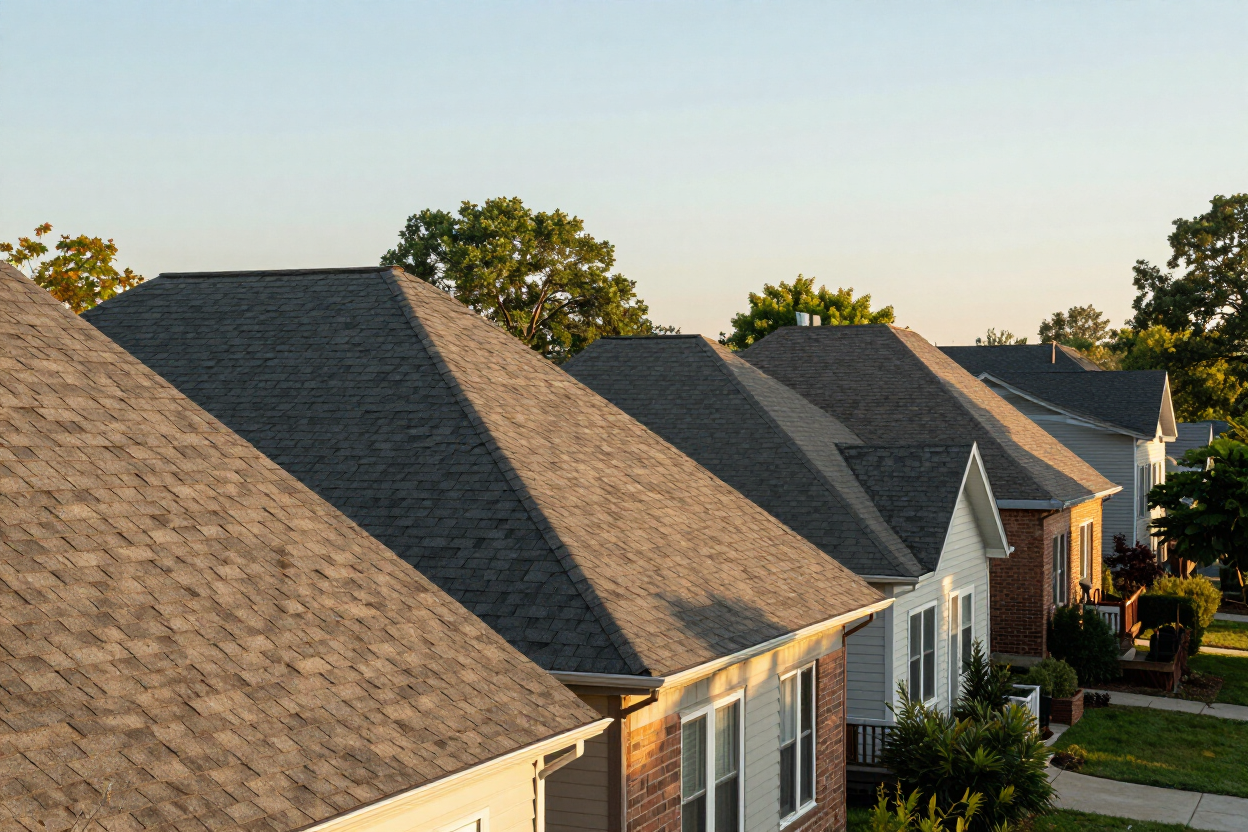
Indiana Roofing Company is a licensed roofing contractor serving Hammond, Indiana and the surrounding Northwest Indiana region since 2010. Re-roofing — the process of installing a new membrane layer directly over an existing, structurally sound roof deck — is one of the most cost-effective options available to property owners whose current system is failing at the surface but still has a solid foundation beneath it. Rather than paying for full tear-off labour and disposal, a qualifying property can receive a fresh, warrantied membrane at materially lower cost and in less time. We have completed re-roofing projects across commercial, industrial, and residential flat roofs throughout Lake County and beyond, applying TPO, PVC, EPDM, and modified bitumen overlays to buildings that passed a rigorous deck and moisture inspection.
Re-Roofing vs. Full Roof Replacement — What Northwest Indiana Property Owners Need to Know
Re-roofing installs a new membrane over an existing deck and is the better option when the deck is structurally sound and moisture testing confirms dry insulation. It costs less, installs faster, and avoids tear-off disposal fees. Full replacement is the right call when the deck is compromised or trapped moisture is widespread.
Not every roof qualifies for re-roofing — deck integrity and moisture content are the determining factors, and we assess both before recommending this route. When a property does qualify, re-roofing cuts project timelines, reduces disruption to building occupants, and eliminates the landfill and labour costs associated with removing the old system. For property owners in Northwest Indiana working within a defined maintenance budget, it is often the right call. Call (219) 629-6405 for a free inspection and we will tell you plainly whether your roof is a re-roofing candidate.
Not Every Roof Qualifies — Here Is What We Check Before Recommending Re-Roofing
The first requirement for re-roofing eligibility is a sound roof deck. If the existing deck shows signs of rot, delamination, deflection under load, or structural damage from long-term water infiltration, a new membrane layer cannot correct those problems — it will only cover them until they fail again. We inspect the full deck surface and probe any areas that show soft spots or previous patch work before making a recommendation. In Indiana, most residential and commercial flat roofs use plywood or OSB decking; industrial buildings often use steel or concrete decks. Each material has specific integrity thresholds we evaluate against before approving a re-roofing scope.
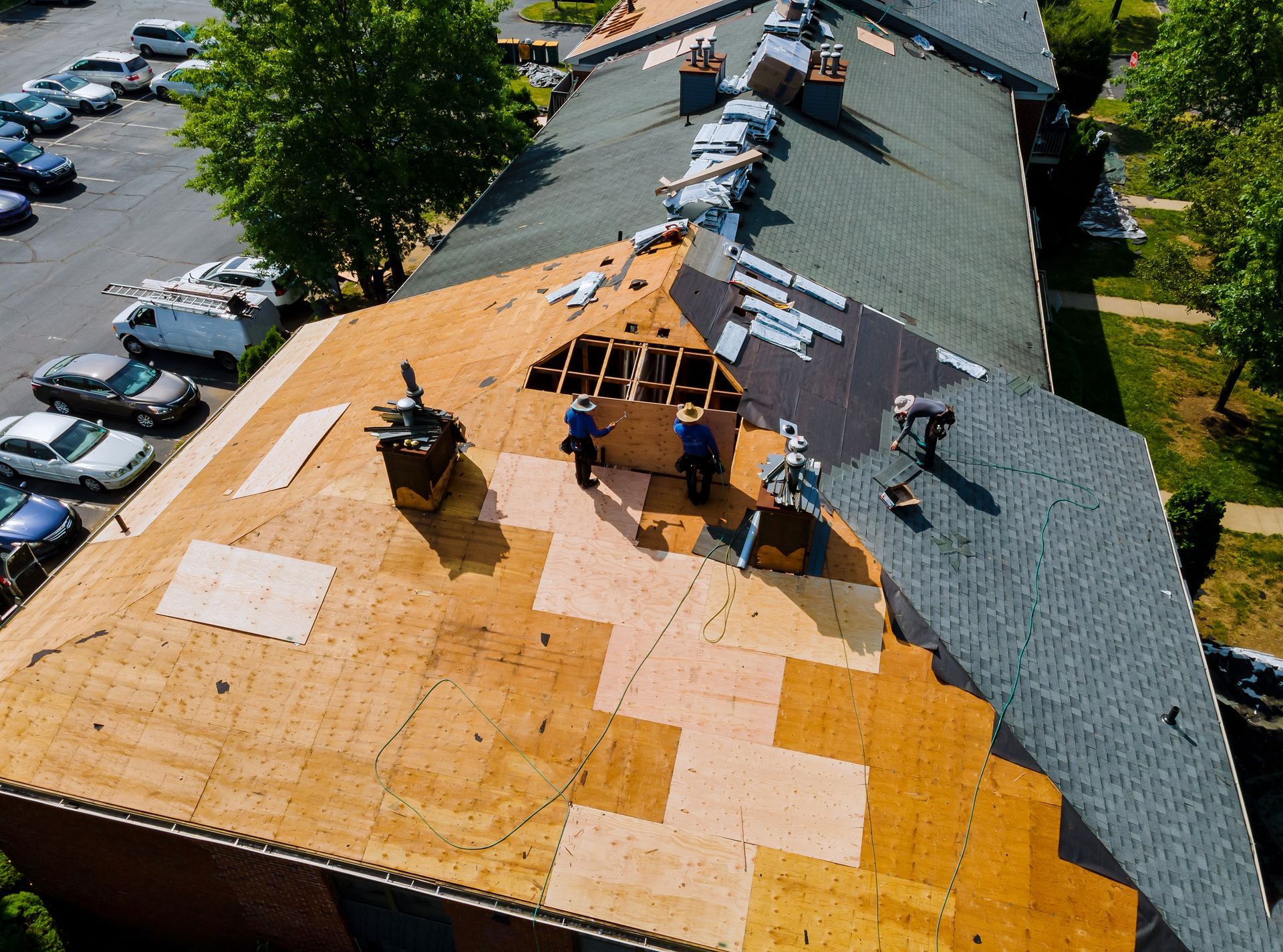
Trapped moisture in the existing insulation layer is the factor that most often disqualifies a property from re-roofing. Water that has penetrated the membrane and saturated the insulation boards does not evaporate when covered with a new membrane — it stays, continues degrading the deck from below, and shortens the life of the new system significantly. We conduct a moisture survey using infrared or capacitance-based testing on every roof we evaluate for re-roofing. If more than approximately 25 percent of the insulation field shows trapped moisture, we recommend full replacement. For properties where moisture is limited to isolated zones, targeted insulation removal and replacement can bring the roof within re-roofing eligibility.
Indiana building code limits the number of roof membrane layers permitted on a structure before full tear-off is required — in most jurisdictions this is two layers, meaning a roof that already carries one overlay is not eligible for a second. We confirm the existing layer count and verify local code requirements for the specific municipality before any re-roofing scope is written. Hammond, Munster, Merrillville, and Valparaiso each fall under their own local enforcement, and we know what each jurisdiction expects. If a re-roofing scope is written, we pull the required permits and handle all documentation.
How Indiana Roofing Company Handles a Re-Roofing Project from First Call to Final Inspection
Step 1 — Free Inspection and Initial Assessment
The process starts with a call to (219) 629-6405. We schedule a free on-site inspection at a time that works for you. During that visit we walk the full roof surface, document the existing membrane condition, check drainage slopes and drain functionality, and identify any visible damage, blistering, or seam failures. This gives us the baseline picture before any invasive testing begins.
Step 2 — Moisture Survey and Deck Evaluation
We conduct a moisture survey across the full insulation field using infrared scanning or capacitance testing depending on the roof type and conditions. Separately, we probe the deck for soft spots, delamination, or deflection. Both surveys are documented in writing. If the deck and insulation meet eligibility thresholds, we proceed to scoping. If they do not, we explain exactly why full replacement is the more durable path and provide a replacement estimate alongside the re-roofing one so you can compare both options on the same page.
Step 3 — Written Estimate and Membrane Selection
A free written estimate covers all labour, materials, and permit fees with no hidden line items. We walk you through the available membrane options — TPO, PVC, EPDM, and modified bitumen — and explain which system suits your building's use, climate exposure, and budget. TPO and PVC overlays are common on commercial flat roofs in Northwest Indiana for their heat-welded seam strength and energy-reflective properties; EPDM is frequently specified on residential flat roofs and industrial buildings where flexibility in extreme cold is a priority.
Step 4 — Surface Preparation and Partial Insulation Replacement
Before the new membrane goes down, any isolated wet insulation zones identified in the moisture survey are cut out and replaced with dry boards of matching thickness. The existing membrane surface is swept, cleaned, and mechanically conditioned where needed to ensure proper adhesion or fastening for the new layer. Edge details, flashings, and penetration boots are inspected and replaced where they show deterioration — the new membrane is only as good as the perimeter details that seal it.
Step 5 — New Membrane Installation
The new membrane is installed to manufacturer specification and local code. Heat-welded thermoplastic systems (TPO, PVC) are seamed using calibrated hot-air welding equipment and probe-tested at every seam after installation. EPDM overlays are adhered or mechanically fastened depending on roof geometry and wind uplift requirements. Modified bitumen overlays are torch-applied or cold-adhesive applied depending on the substrate and building occupancy. All flashings are integrated into the new membrane plane before any penetration work is completed.
Step 6 — Final Inspection and Documentation
Once installation is complete, we conduct a full walk of the finished surface — checking seam integrity, drain integration, flashing terminations, and edge conditions. We provide written documentation of the completed scope, the membrane system installed, the permit sign-off where applicable, and the manufacturer warranty information. Indiana Roofing Company has operated in this market since 2010 from 7324 Calumet Ave, Hammond, Indiana 46324 — we stand behind the work after we leave the job site.
Re-Roofing Questions Northwest Indiana Property Owners Ask Most
Will adding another membrane layer put too much weight on my roof structure?
Most re-roofing membrane systems add between one and two pounds per square foot to the roof load — a figure that falls well within the structural tolerance of the vast majority of commercial and residential buildings. We review the building's design load specifications during the deck evaluation. If load is a concern, we flag it and present alternatives before any work begins.
Does a re-roofed system carry the same warranty as a new roof installation?
Manufacturer warranties for re-roofing overlays are typically available but may differ in term length from new-construction warranties. The specific warranty depends on the membrane manufacturer and the installation system specified. We provide the applicable warranty documentation at estimate stage so you know exactly what coverage the new system carries before you commit.
How many membrane layers is Indiana code currently allowing before full tear-off is required?
Indiana building code generally permits a maximum of two membrane layers on a low-slope roof. A property that already carries one overlay may not be eligible for a second without a full tear-off first. We verify the existing layer count and confirm the local jurisdiction's current code requirements — Hammond, Merrillville, and Valparaiso each enforce their own standards — before writing any re-roofing scope.
How long will a re-roofed flat roof last compared to a full replacement?
A properly installed TPO or PVC overlay on a sound, dry deck typically delivers 15 to 20 years of service life — comparable to a full replacement using the same membrane type. Lifespan depends on membrane thickness, seam quality, drainage adequacy, and ongoing maintenance. Annual inspection keeps a re-roofed system performing at the top of that range.
Can re-roofing be done in winter in Northwest Indiana?
Heat-welded thermoplastic membranes — TPO and PVC — can be installed in cold temperatures with proper equipment and precautions. EPDM cold-adhesive installations have temperature minimums that vary by adhesive specification. We schedule re-roofing projects based on forecast conditions and membrane manufacturer requirements, and we will be direct with you if timing needs to shift for quality reasons.
What happens if moisture is found under my existing membrane during the survey?
Isolated wet zones are cut out, the damp insulation is removed and replaced with dry material of matching thickness, and the surface is allowed to dry before new membrane goes down. If the moisture survey shows widespread saturation across more than roughly 25 percent of the field, full replacement becomes the more durable option and we explain that clearly, with both estimates provided for comparison.
Find Out If Your Property Qualifies for Re-Roofing
A free inspection from Indiana Roofing Company gives you a straight answer — whether your roof is a re-roofing candidate or whether full replacement is the smarter investment. We serve Hammond and all of Northwest Indiana. Call (219) 629-6405 or reach us at 7324 Calumet Ave, Hammond, Indiana 46324. We are available Monday through Friday 7:00 AM to 7:00 PM and Saturday through Sunday 7:00 AM to 5:00 PM.